The Quantum Threat to Global Cryptographic Standards

Introduction: The Horizon of Q-Day
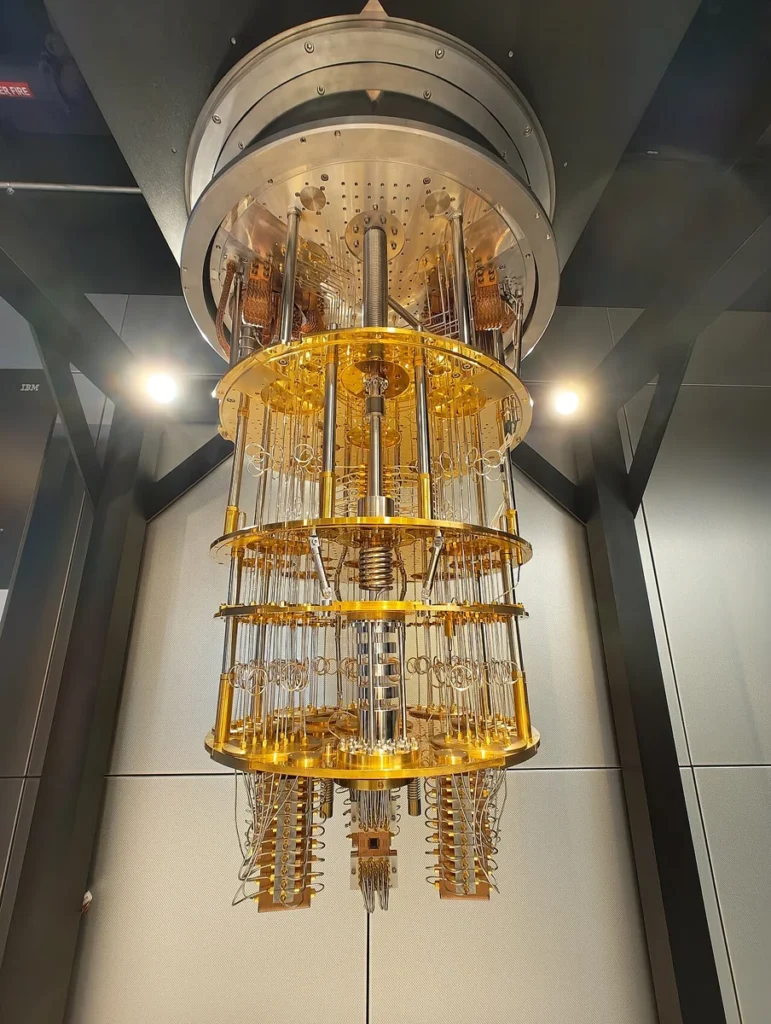
The global technological and financial landscape is hurtling toward an inevitable, mathematically verifiable event horizon commonly termed “Q-Day.” This is the theoretical point in time when a quantum computer achieves sufficient logical qubits, coherence times, and fault-tolerant error correction to efficiently execute Shor’s algorithm at scale. When that threshold is crossed, the foundational public-key cryptographic algorithms that secure the entire modern internet—specifically RSA (Rivest-Shamir-Adleman) and ECC (Elliptic-Curve Cryptography)—will be permanently broken.
The implications for global financial institutions, military communications, state secrets, and digital sovereignty are staggering. This analysis breaks down the mathematics of the quantum threat, the “Store Now, Decrypt Later” operational reality, and the architectural migrations required to survive the post-quantum transition.
The Mathematical Disruption: Shor’s and Grover’s Algorithms
To understand why quantum processing shatters classical cryptography, one must dissect the computational complexity upon which modern encryption rests:
1. Classical Trapdoor Mathematics
Classical public-key cryptography relies on one-way mathematical trapdoor functions: problems that are trivial to compute in the forward direction, but computationally intractable to reverse without a private key:
- RSA: Relies on the integer factorization problem. Multiplying two 1024-bit prime numbers $p imes q = N$ takes microseconds. Factoring $N$ back into its prime components on a classical supercomputer running the General Number Field Sieve (GNFS) requires millions of CPU-years.
- ECC (ECDSA, ECDH): Relies on the discrete logarithm problem over elliptic curve groups. It offers equivalent security to RSA with significantly smaller key sizes.
2. Shor’s Algorithm: Exponential Speedup
In 1994, mathematician Peter Shor proved that a quantum computer utilizing quantum superposition and entanglement can solve both prime factorization and the discrete logarithm problem in polynomial time ($O((\log N)^3)$). By utilizing a Quantum Fourier Transform (QFT), Shor’s algorithm determines the periodicity of a mathematical function corresponding to the modular exponentiation problem.
A fault-tolerant quantum computer running approximately 4,000 to 10,000 stable logical qubits could factor a 2048-bit RSA key not in geological epochs, but in mere hours. The protective mathematical barrier vanishes.
3. Grover’s Algorithm: Quadratic Speedup on Symmetric Ciphers
While Shor’s algorithm completely breaks public-key cryptography, symmetric ciphers (such as AES) and cryptographic hash functions (such as SHA-256 and SHA-3) fare significantly better. Grover’s algorithm provides a quadratic speedup for searching unstructured databases.
This effectively halves the security bits of symmetric encryption: AES-128 is reduced to 64 bits of effective quantum security (which is vulnerable to brute force), while AES-256 is reduced to 128 bits of security—which remains computationally secure against brute-force attacks. Therefore, symmetric encryption survives Q-Day simply by doubling key lengths to AES-256.
The Asymmetric Reality: “Store Now, Decrypt Later” (SNDL)
Many corporate CTOs and systems architects dismiss the quantum threat as a distant academic concern, pointing out that commercially viable, fault-tolerant quantum computers are still years away. This perspective is a catastrophic operational miscalculation due to the “Store Now, Decrypt Later” (SNDL) attack vector.
Hostile nation-state intelligence agencies and advanced threat actors are actively harvesting and archiving petabytes of encrypted internet traffic right now—TLS handshakes, encrypted enterprise backups, military satellite downlinks, and diplomatic cables. They are warehousing this encrypted ciphertext in massive high-capacity data centers. The moment an operational quantum computer comes online, they will retroactively decrypt the archived data.
Any data requiring confidentiality beyond a five-to-ten-year horizon—intellectual property, source code, genomic databases, state secrets—is already compromised if it is transmitted over standard TLS sessions utilizing RSA or ECDHE today.
Post-Quantum Cryptography (PQC): The NIST Standards
To prevent global cryptographic collapse, the National Institute of Standards and Technology (NIST) conducted an intensive multi-year international standardization competition, resulting in the formalization of four primary Post-Quantum Cryptographic algorithms:
1. Lattice-Based Cryptography
Lattice-based algorithms rely on the hardness of high-dimensional geometric problems, specifically the Shortest Vector Problem (SVP) and the Learning With Errors (LWE) problem in high-dimensional vector spaces. These problems remain exponentially difficult for both classical and quantum algorithms.
- ML-KEM (FIPS 203, formerly CRYSTALS-Kyber): The primary global standard for Key Encapsulation Mechanisms (KEMs), used to establish shared secret keys for secure TLS sessions.
- ML-DSA (FIPS 204, formerly CRYSTALS-Dilithium): The primary standard for digital signatures, used for certificate authorities, identity attestation, and binary signing.
2. Stateless Hash-Based Signatures
SLH-DSA (FIPS 205, formerly SPHINCS+): Relies solely on the security of cryptographic hash functions arranged in complex Merkle trees. While its signature sizes are significantly larger than lattice alternatives, it provides an indispensable mathematical fallback because its security does not rely on lattice assumptions.
Architectural Migration: Building Cryptographic Agility
Migrating enterprise infrastructure to post-quantum standards is the most complex engineering challenge since the transition from IPv4 to IPv6. Cryptographic algorithms are deeply hardcoded into operating system kernels, micro-controllers, embedded firmware, web browsers, and TLS termination proxies.
To successfully navigate the transition, system architects must execute three immediate mandates:
- Implement Hybrid Key Exchange: Deploy TLS configurations that combine a classical algorithm (like X25519) with a post-quantum algorithm (like Kyber/ML-KEM). If the newly standardized PQC algorithm contains an unforeseen mathematical flaw, the classical algorithm ensures baseline protection; if quantum decryption emerges, the PQC layer preserves confidentiality.
- Audit Cryptographic Inventories: Document every location where public keys are stored, certificates are verified, and data is archived across your cloud environments.
- Enforce Cryptographic Agility: Abstract cryptographic primitives away from core application code. Ensure that key exchange algorithms and signature verification libraries can be hot-swapped without refactoring business logic.
Conclusion
The quantum threat is not science fiction; it is an impending mathematical certainty. The organizations that postpone migration until the first fault-tolerant quantum computer is announced will find their proprietary assets and historical communications irrevocably exposed. In the arena of sovereign infrastructure engineering, the timeline for post-quantum defense is not tomorrow—it is right now.